3 Best AI Frameworks for Virtual World Physics
Reviewing the top 3 AI frameworks that improve physics simulation and realism in virtual world environments.
Reviewing the top 3 AI frameworks that improve physics simulation and realism in virtual world environments.
3 Best AI Frameworks for Virtual World Physics
If you have ever spent time in a virtual world, you know that the magic really happens when things feel real. It is not just about the graphics or the lighting; it is about how objects collide, how water flows, and how gravity pulls on your avatar. For a long time, we relied on traditional physics engines that were great at math but terrible at nuance. Now, we are entering the era of AI-driven physics, where machine learning models are doing the heavy lifting to make simulations feel indistinguishable from reality. If you are a developer or a creator looking to level up your virtual world, you need to know which frameworks are actually worth your time.
Understanding AI Physics Frameworks for Virtual World Development
Traditional physics engines like PhysX or Havok are deterministic. They follow strict rules. If you drop a ball, it bounces based on a pre-set coefficient of restitution. AI frameworks, however, learn from data. They can approximate complex fluid dynamics, soft-body deformations, and chaotic interactions that would normally crash a standard CPU. By integrating AI, you are essentially giving your virtual world a brain that understands the physical properties of the environment in real-time. This is crucial for high-fidelity simulations where performance and realism must coexist.
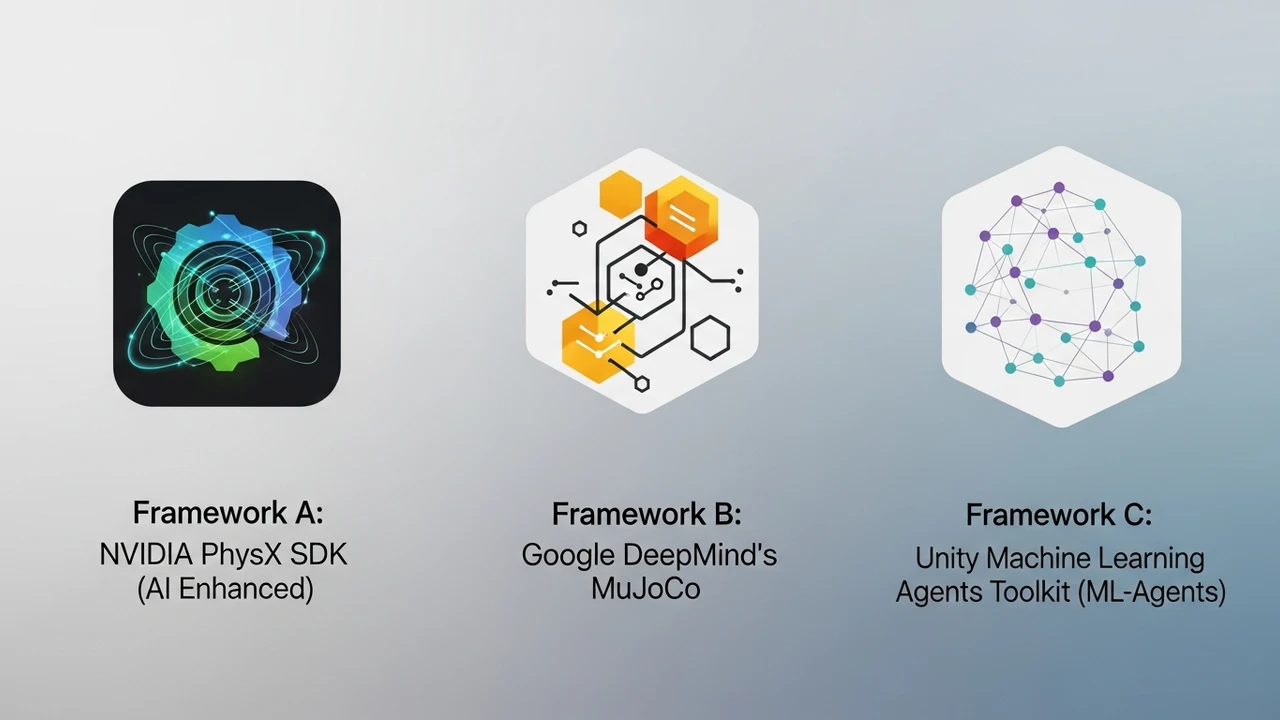
NVIDIA PhysX with AI Integration
NVIDIA has been the king of physics for years, but their recent pivot toward AI-enhanced simulation is a game changer. The PhysX SDK, when paired with their Omniverse platform, uses neural networks to predict how complex materials behave. Instead of calculating every single particle in a cloth simulation, the AI predicts the movement based on learned patterns. This saves massive amounts of compute power. It is perfect for developers who want high-end realism without needing a supercomputer to run the client. Pricing is generally free for developers using the SDK, but enterprise-grade support and cloud-based simulation through Omniverse come with subscription tiers that vary based on your scale.
Unity Sentis and Machine Learning Agents
Unity has made huge strides with Sentis, which allows you to run neural networks directly on the user's device. This is a massive deal for physics. You can train a model to handle complex character movement or environmental interactions and then deploy it inside your game. It is not just about pre-baked animations; it is about real-time physics adaptation. If your character walks on uneven terrain, the AI adjusts the foot placement and body weight distribution dynamically. It is incredibly flexible. Unity offers a free tier for personal use, while Pro and Enterprise plans start at around $2,000 per seat annually, which is a solid investment for professional studios.
Havok Physics with AI Predictive Modeling
Havok remains the industry standard for a reason. Their latest updates have integrated AI-driven predictive modeling to handle large-scale destruction and crowd physics. Imagine a building collapsing in a virtual world; calculating every piece of debris is a nightmare. Havok’s AI framework predicts the most likely trajectory of debris based on the impact force, making the scene look cinematic while keeping the frame rate stable. It is the go-to for AAA titles. Licensing for Havok is typically custom-quoted based on the project scope, so you will need to reach out to their sales team, but expect to pay a premium for the reliability and support they provide.
Comparing the Top AI Physics Solutions
When you look at these three, the choice depends on your specific needs. NVIDIA is the best for visual fidelity and industrial-grade digital twins. If you are building a high-end simulation where every pixel matters, go with NVIDIA. Unity Sentis is the winner for indie developers and mobile-first virtual worlds because it is lightweight and runs locally. Havok is the heavy hitter for massive, complex environments where stability is the absolute priority. You are essentially choosing between cutting-edge research, developer-friendly flexibility, and battle-tested reliability.
Practical Use Cases for AI Physics in Virtual Worlds
Think about a virtual shopping mall. You want the clothes on your avatar to move naturally as you walk. You want the items on the shelves to react if you bump into them. AI physics frameworks make this possible without the lag that usually comes with complex collision detection. Or consider a virtual training simulation for surgeons. The AI can simulate the resistance of human tissue in a way that traditional math simply cannot capture. These frameworks are not just for games; they are the backbone of the next generation of digital interaction.
Getting Started with Implementation
Don't try to overhaul your entire physics engine overnight. Start by identifying the most 'expensive' parts of your simulation—the parts that cause the most lag. Maybe it is your water simulation or your character's hair physics. Pick one of these frameworks and run a pilot test. Most of these companies offer extensive documentation and community forums. The learning curve is steep, but the payoff in user immersion is worth every hour of debugging. You are building the future of digital reality, and physics is the foundation that holds it all together.
:max_bytes(150000):strip_icc()/277019-baked-pork-chops-with-cream-of-mushroom-soup-DDMFS-beauty-4x3-BG-7505-5762b731cf30447d9cbbbbbf387beafa.jpg)