3 Best AI Tools for Procedural Animation
Create lifelike movement with these 3 AI tools specialized in procedural animation for virtual characters.
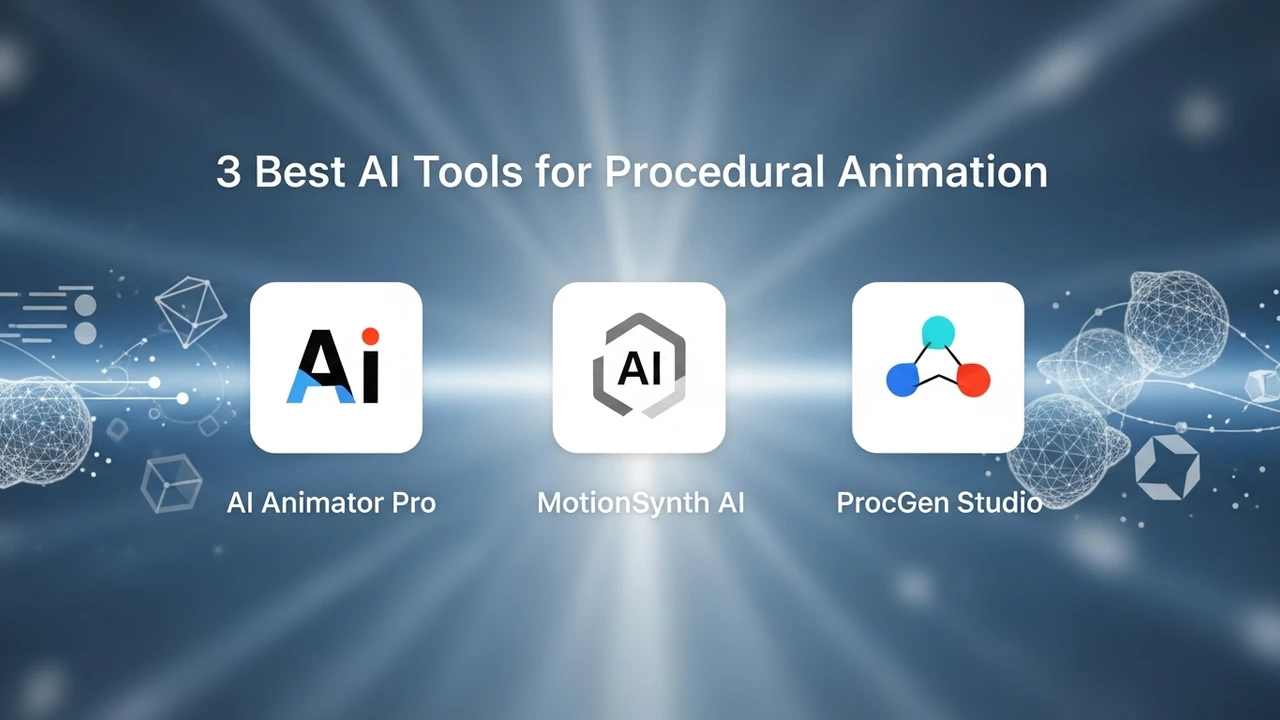
Create lifelike movement with these 3 AI tools specialized in procedural animation for virtual characters. In the rapidly evolving landscape of virtual worlds and digital humans, the ability to generate fluid, realistic motion without spending hundreds of hours on manual keyframing is the holy grail for developers. Procedural animation, powered by artificial intelligence, is changing the game by allowing characters to react dynamically to their environment, terrain, and interactions in real-time. Whether you are building an indie game or a high-end simulation, these tools are essential for your pipeline.
Understanding Procedural Animation and AI Motion Synthesis
Procedural animation is essentially the process of generating movement through algorithms rather than pre-recorded data. When you combine this with AI, you get motion that adapts to the character's physical state and the world around them. Imagine a digital human walking up a flight of stairs; instead of playing a canned animation, the AI calculates the foot placement, knee bend, and center of gravity based on the geometry of the steps. This is the future of immersive virtual worlds. By leveraging machine learning models trained on massive motion capture datasets, these tools can predict how a body should move, saving developers countless hours of tedious work.
Top 3 AI Tools for Procedural Animation
If you are looking to elevate your project, these three tools stand out as the industry leaders for procedural animation and motion synthesis.
1. Move AI
Move AI has revolutionized the way we think about motion capture. It uses advanced computer vision to extract 3D motion from standard video footage, which can then be applied procedurally to your digital characters. It is incredibly accessible because you don't need a studio full of expensive cameras. You can use your iPhone to capture high-fidelity movement and translate it into your virtual world. It is perfect for developers who need realistic human movement without the overhead of traditional mocap.
2. DeepMotion
DeepMotion is a powerhouse for browser-based motion capture and procedural animation. Their Animate 3D service allows you to upload video files and instantly convert them into 3D animations that can be retargeted to any character rig. What makes it great for procedural workflows is its ability to handle physics-based interactions. If your character needs to interact with objects or maintain balance in a complex environment, DeepMotion provides the stability and realism required for professional-grade simulations.
3. Cascadeur
Cascadeur is unique because it is physics-based animation software that uses AI to help you pose and animate characters. It is not just about converting video; it is about creating movement from scratch with AI assistance. The software automatically calculates the center of mass and ensures that your character's movements follow the laws of physics. It is a favorite among indie developers who want the control of manual animation but the speed and accuracy of AI-driven procedural systems.
Comparing Features and Use Cases
When choosing between these tools, consider your specific needs. Move AI is best for capturing real-world human performance and bringing it into a digital space. DeepMotion is the go-to for quick, scalable animation pipelines where you have a lot of video data to process. Cascadeur is the best choice if you are an animator who wants to maintain artistic control while letting AI handle the complex physics and secondary motion. For instance, if you are building a social VR platform, Move AI might be your best bet for user-generated content. If you are developing a complex RPG, Cascadeur will give you the precise control needed for combat and unique character behaviors.
Pricing and Accessibility
Pricing varies significantly across these platforms. Move AI typically operates on a subscription model tailored for professional studios, often starting in the hundreds of dollars per month depending on the scale of your project. DeepMotion offers a freemium model, which is fantastic for hobbyists and small teams, with paid tiers that unlock higher resolution and faster processing times. Cascadeur offers a generous free version for individual creators, with a Pro subscription that provides access to advanced features like auto-physics and full-body rigging tools. Always check their official websites for the latest pricing, as they frequently update their tiers to accommodate different developer needs.
Integrating AI Motion into Your Workflow
The key to success with these tools is integration. Most of them support standard formats like FBX and BVH, making it easy to import your AI-generated animations into engines like Unity or Unreal Engine. Start by identifying the most repetitive animations in your project—like walking, idling, or basic interactions—and use these AI tools to automate them. Once you have a solid foundation of procedural movement, you can focus your manual animation efforts on the high-impact, hero moments that define your character's personality. This hybrid approach is the most efficient way to build a living, breathing virtual world that feels responsive and alive to every user who steps into it.
:max_bytes(150000):strip_icc()/277019-baked-pork-chops-with-cream-of-mushroom-soup-DDMFS-beauty-4x3-BG-7505-5762b731cf30447d9cbbbbbf387beafa.jpg)