5 Best AI Tools for Climate Change Simulation
Discover the 5 best AI-driven tools for simulating climate patterns and environmental impact on a global scale.
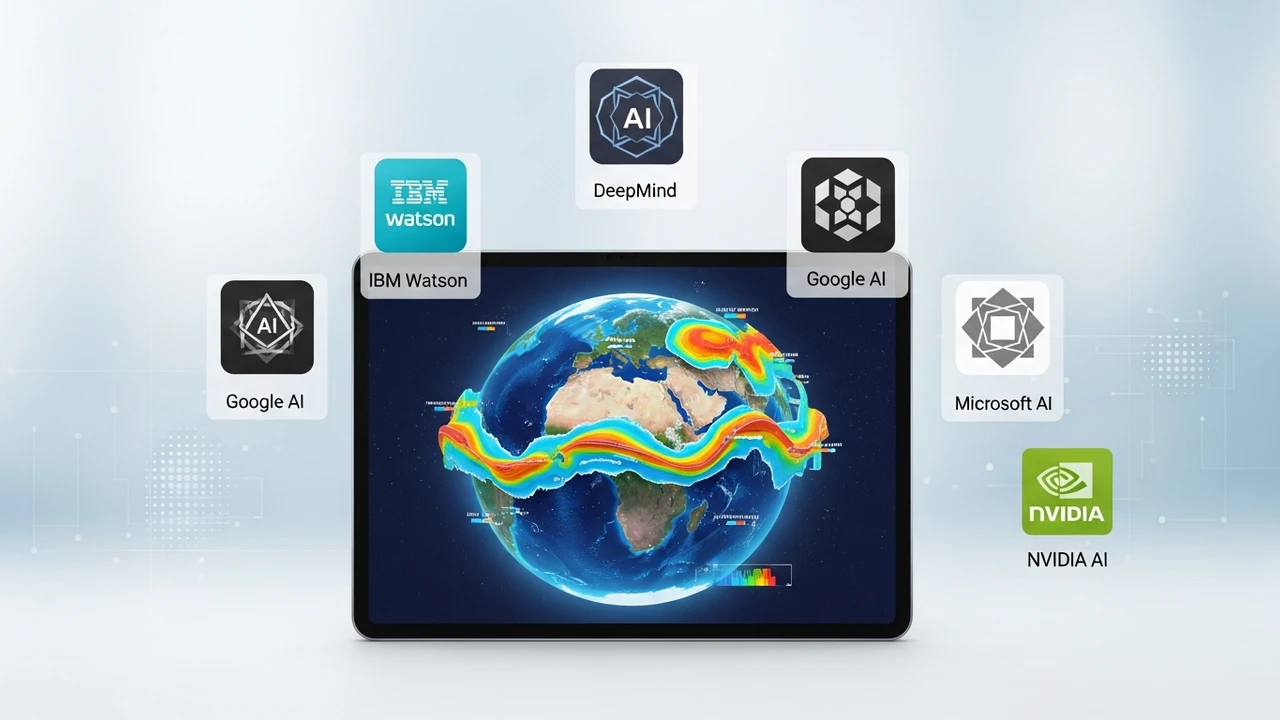
5 Best AI Tools for Climate Change Simulation
Discover the 5 best AI-driven tools for simulating climate patterns and environmental impact on a global scale.
Climate change is arguably the most complex challenge humanity has ever faced. Because the Earth's climate system is so incredibly intricate, traditional physics-based models often struggle to keep up with the sheer volume of data and the speed at which environmental shifts are occurring. This is where Artificial Intelligence steps in. By leveraging machine learning, neural networks, and massive datasets, AI-driven climate simulation tools are revolutionizing how we predict weather patterns, track carbon emissions, and model the long-term effects of global warming. If you are a researcher, a policy maker, or just someone deeply concerned about our planet's future, you need to know which tools are leading the charge.
Understanding AI Driven Climate Modeling and Predictive Analytics
At its core, AI-driven climate simulation is about pattern recognition on a planetary scale. Unlike old-school models that rely solely on rigid mathematical equations, AI models learn from historical climate data, satellite imagery, and real-time sensor inputs. They can identify subtle correlations that human analysts might miss. For instance, an AI can analyze how a specific change in ocean temperature in the Pacific might trigger a drought in a specific region of Southeast Asia months later. This predictive power is essential for disaster preparedness and resource management.
Top 5 AI Tools for Environmental Impact and Climate Simulation
When we look at the current market, five platforms stand out for their ability to handle complex environmental simulations. These tools are being used by governments, NGOs, and private enterprises to build a more resilient future.
1 NVIDIA Earth 2
NVIDIA Earth 2 is essentially a digital twin of our planet. It uses the Modulus framework to create high-fidelity simulations of weather and climate. It is incredibly fast, allowing researchers to run thousands of scenarios in a fraction of the time it would take on a standard supercomputer. It is perfect for predicting extreme weather events like hurricanes or heatwaves. Pricing is generally enterprise-based, often requiring a partnership with NVIDIA’s cloud infrastructure.
2 IBM Environmental Intelligence Suite
IBM has long been a leader in data analytics, and their Environmental Intelligence Suite is a powerhouse for businesses. It helps companies understand how climate change will impact their supply chains and physical assets. It uses AI to provide hyper-local weather forecasts and risk assessments. It is a subscription-based service, with pricing tiers depending on the scale of data integration required.
3 Microsoft Planetary Computer
This is a massive open-data platform. It combines a multi-petabyte catalog of global environmental data with powerful computing tools. It is designed for researchers who need to analyze land cover, biodiversity, and water availability. Because it is built on Azure, it is highly scalable. It is free for many research applications, though heavy compute usage will incur standard Azure cloud costs.
4 Google Earth Engine
Google Earth Engine is the gold standard for geospatial analysis. It allows users to run complex algorithms on satellite imagery to track deforestation, urban growth, and water usage over decades. It is incredibly user-friendly for those with some coding knowledge in JavaScript or Python. It is free for non-commercial and research use, making it the most accessible tool on this list.
5 ClimateAI
ClimateAI is more focused on the intersection of climate and agriculture. It helps farmers and food companies predict how changing weather patterns will affect crop yields. By using AI to simulate future climate scenarios, it helps businesses make better decisions about what to plant and where. It operates on a B2B SaaS model, with custom pricing based on the specific needs of the agricultural enterprise.
Comparing AI Climate Simulation Software Features and Use Cases
Choosing the right tool depends entirely on your goal. If you are doing academic research on land use, Google Earth Engine is unbeatable. If you are a corporation trying to protect your supply chain from climate-related disruptions, IBM’s suite is the way to go. NVIDIA Earth 2 is the heavy hitter for pure meteorological simulation, while ClimateAI is the niche leader for the food and beverage industry. The main difference lies in the data sources they prioritize and the specific output they provide—whether it is a visual map, a risk report, or a predictive yield forecast.
Real World Applications of AI in Environmental Sustainability
We are seeing these tools used in fascinating ways. In Southeast Asia, for example, AI models are being used to predict flood risks in low-lying coastal cities, allowing for better urban planning and the construction of smarter drainage systems. In the United States, energy companies are using these simulations to predict how heatwaves will impact power grid demand, helping them prevent blackouts. The ability to simulate the 'what-if' scenarios is what makes these tools so valuable. We can test the impact of a new carbon tax, a reforestation project, or a shift in agricultural practices before we ever break ground in the real world.
Future Outlook for AI and Climate Tech
The technology is only getting better. As we integrate more IoT sensors into our cities and farms, the data feeding these AI models will become more granular and accurate. We are moving toward a world where we can simulate the climate impact of almost any human decision. This level of transparency and predictive capability is our best shot at mitigating the worst effects of climate change. It is not just about having the data; it is about having the intelligence to act on it before the environment reaches a tipping point.
:max_bytes(150000):strip_icc()/277019-baked-pork-chops-with-cream-of-mushroom-soup-DDMFS-beauty-4x3-BG-7505-5762b731cf30447d9cbbbbbf387beafa.jpg)