5 Best AI Tools for Debugging Virtual Worlds
Find and fix bugs faster with these 5 AI-powered debugging tools designed for complex virtual world environments.
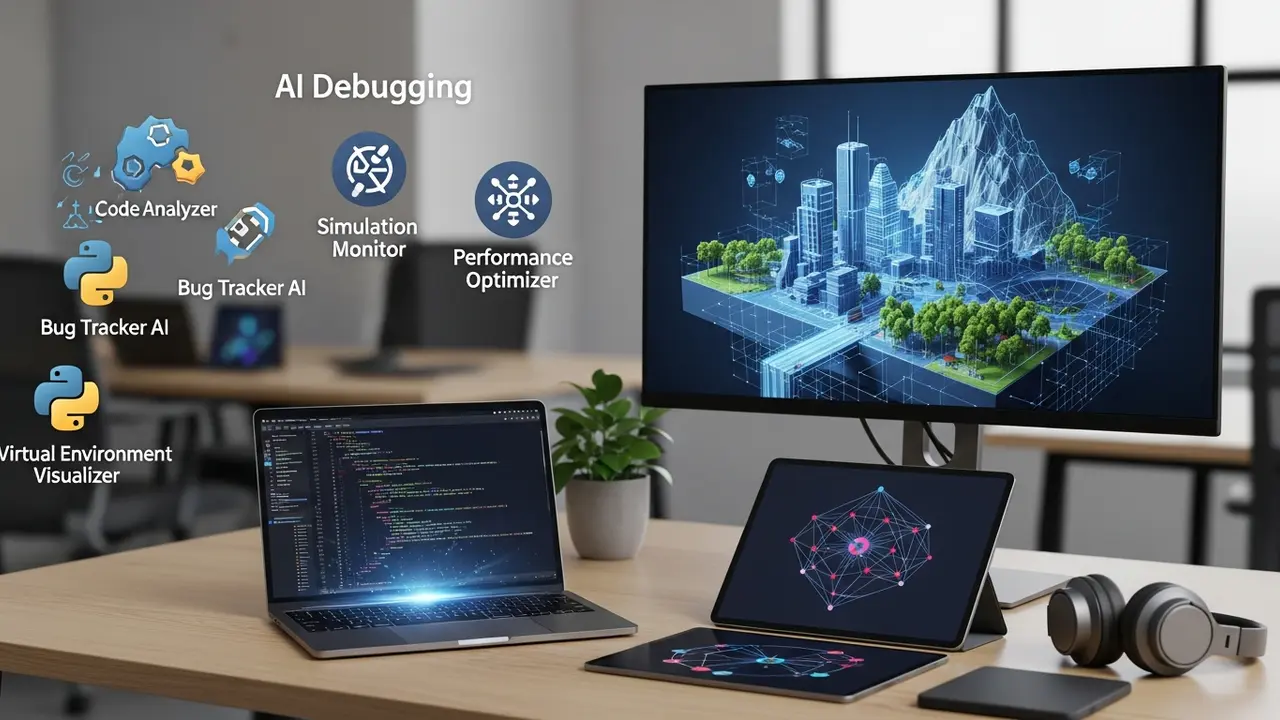
Find and fix bugs faster with these 5 AI-powered debugging tools designed for complex virtual world environments.
5 Best AI Tools for Debugging Virtual Worlds
Building a virtual world is a massive undertaking. Whether you are crafting a hyper-realistic simulation or a social metaverse, the complexity of 3D assets, physics engines, and real-time networking often leads to bugs that are nearly impossible to track down manually. Traditional debugging methods just don't cut it anymore when you are dealing with millions of lines of code and dynamic AI behaviors. That is where AI-powered debugging tools come into play. These tools act like a super-powered pair of eyes, scanning your environment for anomalies, performance bottlenecks, and logic errors before they ruin the user experience.
AI Driven Performance Optimization and Debugging Tools
When we talk about debugging in virtual worlds, we are not just talking about syntax errors. We are talking about frame rate drops, memory leaks, and AI pathfinding glitches. The first tool on our list is Unity Muse. While many know it for asset generation, its debugging suite is a game-changer. It uses machine learning to analyze your scene hierarchy and identify objects that are causing performance overhead. If your virtual world is stuttering, Muse can pinpoint exactly which shader or script is hogging the GPU. It is priced at a subscription model starting around $30 per month, making it accessible for indie developers and studios alike.
Next up is NVIDIA Nsight. This is the gold standard for developers working with high-fidelity simulations. It uses AI to perform deep profiling of your graphics pipeline. If you are building a digital twin, Nsight helps you visualize exactly how your hardware is processing every frame. It is incredibly powerful for identifying bottlenecks in ray tracing and physics calculations. While the core version is free, the enterprise support packages can run into the thousands, but for professional-grade virtual worlds, it is an essential investment.
Automated Logic and AI Behavior Testing Platforms
Debugging the logic of your NPCs is a whole different beast. GameDriver is an AI-driven testing framework that automates the testing of your virtual world's logic. Instead of having a human tester walk through every corner of your map, GameDriver uses AI agents to simulate thousands of user interactions in minutes. It can detect if an NPC gets stuck in a wall or if a quest trigger fails to fire. It is a massive time-saver for large-scale projects. Pricing is usually custom-quoted based on the size of your project, but it is widely considered a must-have for enterprise-level metaverse platforms.
Another fantastic option is Applitools. While originally designed for web and mobile, its visual AI technology is being increasingly used to debug UI and environmental consistency in virtual worlds. It can detect visual regressions—like a texture that suddenly turns purple or a UI element that overlaps incorrectly—by comparing your current build against a baseline. It is incredibly intuitive and starts at a free tier for small projects, with professional plans scaling up based on usage.
Comparing AI Debugging Solutions for Virtual Environments
When choosing between these tools, you need to consider your specific needs. If you are focused on graphics and rendering, NVIDIA Nsight is your best bet. If you are more concerned with gameplay logic and NPC behavior, GameDriver is the clear winner. Unity Muse sits in the middle, offering a great all-around experience for those already deep in the Unity ecosystem. For those using Unreal Engine, the built-in AI debugging tools are getting better, but integrating them with a third-party solution like Applitools can provide that extra layer of visual verification that keeps your world polished.
The cost of these tools varies wildly, but think of it as an insurance policy for your development timeline. A single game-breaking bug that makes it to production can cost you thousands in lost users and reputation. By investing in AI-assisted debugging, you are not just fixing code; you are ensuring that your virtual world remains immersive, stable, and ready for the millions of users you hope to attract. Whether you are a solo dev or part of a massive studio, these tools are the secret weapon to staying ahead of the curve in the competitive world of digital simulation.
:max_bytes(150000):strip_icc()/277019-baked-pork-chops-with-cream-of-mushroom-soup-DDMFS-beauty-4x3-BG-7505-5762b731cf30447d9cbbbbbf387beafa.jpg)